How to Choose the Right Baby Bottle Material: PPSU, Tritan, PP, or Glass?
Many customers ask the same question when developing a baby bottle project: “Which baby bottle material is the best?”
In fact, there is no single fixed answer. Different materials have different advantages, and they are suitable for different market positions and sales channels. For baby product brands, importers, and distributors, choosing a baby bottle material should not be based only on which one looks “more premium” or which one has the lowest cost. It should be decided based on the target market, consumer group, selling price, brand positioning, and testing requirements.
The most common baby bottle materials on the market today include PPSU, Tritan, PP, and glass. Below, we will look at the differences between these materials from the perspective of real product development and brand selection.
Why Is Baby Bottle Material So Important?
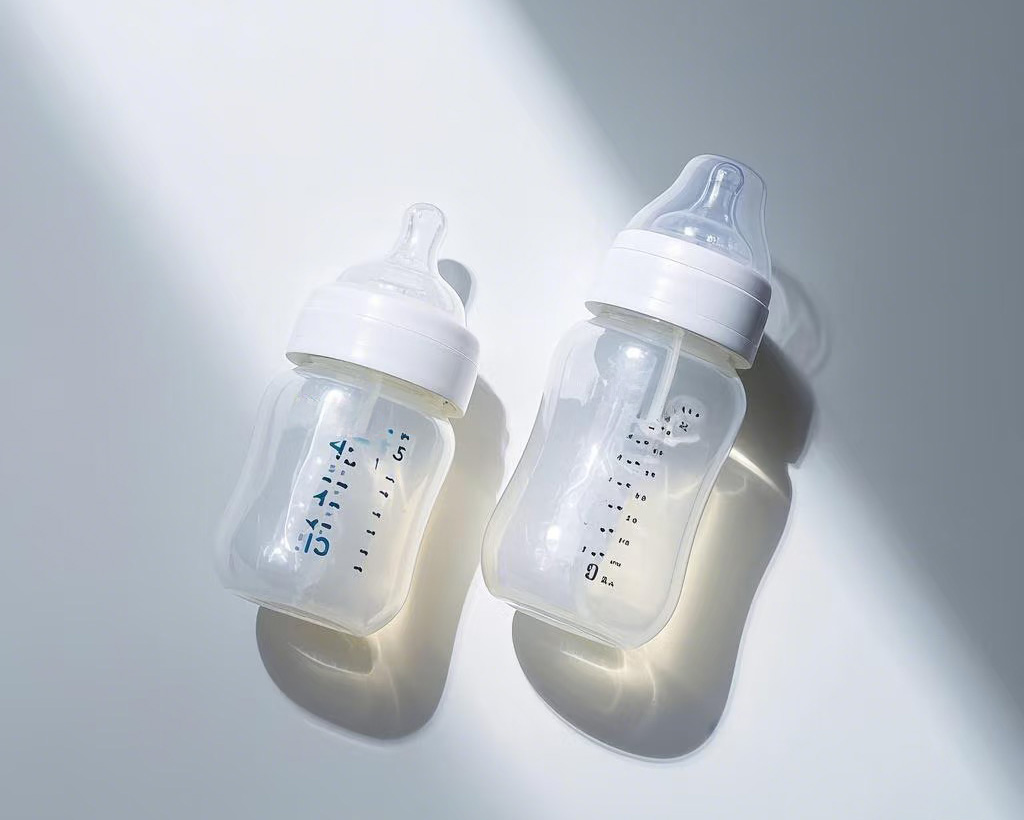
A baby bottle comes into direct contact with milk, warm water, and the baby’s mouth, so material safety is one of the most important concerns for parents.
Parents do not only care about whether the bottle looks good. They also want to know whether it is BPA-Free, heat-resistant, easy to clean, odor-free, durable, and safe for long-term daily use.
For brand owners, material choice directly affects product positioning, price range, packaging claims, testing requirements, and market acceptance. For example, PPSU is more suitable for mid-to-high-end baby bottle series, PP is more suitable for mass-market price ranges, glass is suitable for customers who value material stability and a strong sense of safety, while Tritan is more commonly used for children’s water bottles, sippy cups, and some training cup products.
So baby bottle material is not only a technical issue. It is also a brand positioning decision.
PPSU Baby Bottles: Suitable for Mid-to-High-End Baby Bottle Brands
PPSU is one of the most popular materials used in mid-to-high-end baby bottles. It usually has a light amber color. It does not look as clear as glass, but it has a strong premium product identity.
The main advantages of PPSU are good heat resistance, strong impact resistance, and better aging resistance. It is suitable for daily baby feeding and repeated cleaning or sterilization. For brands that want to build a mid-to-high-end baby bottle series, PPSU is a very suitable material to consider.
Many brands use PPSU to develop 160ml, 240ml, and 300ml baby bottle series, covering newborns and different growth stages. It can also be matched with anti-colic nipples, wide-neck structures, dual-handle accessories, or weighted straw sets to extend the product line from baby bottles to training cups.
Of course, PPSU usually costs more than PP and Tritan. If the target market is extremely price-sensitive, PPSU may make the final retail price higher. But if the brand wants to highlight safety, quality, and long-term use value, PPSU is often easier to position as a premium material.
In short, PPSU is more suitable for customers who care about quality, material safety, and brand image.
Tritan Baby Bottles and Water Bottles: High Transparency, Suitable for Children’s Cups and Sippy Cups
Tritan is known for its high transparency and lightweight feel. It looks clean and close to glass, but it is not as easy to break as glass.
In real applications, Tritan is more commonly used for children’s water bottles, straw cups, sippy cups, and some training cup products. For brands that want a clear and modern product appearance while still controlling cost, Tritan is a practical choice.
Compared with PPSU, Tritan is usually easier to control in cost, and its appearance is closer to a transparent water bottle. So if your brand mainly focuses on children’s water bottles, outdoor bottles, kindergarten bottles, or straw cup series, Tritan is often a good option.
However, for newborn baby bottles, especially products that may require frequent high-temperature sterilization, many mid-to-high-end brands still prefer PPSU or glass. Tritan is generally more suitable for daily drinking, weaning transition, and children’s water bottle usage scenarios.
In short, Tritan is suitable for brands that want to balance appearance, lightweight use, and cost control, especially for children’s water bottles and sippy cup product lines.
PP Baby Bottles: More Cost-Effective, Suitable for Mass Markets
PP is a common food contact plastic material and is also used in some baby products.
The main advantages of PP bottles are lower cost, lightweight use, and better resistance to breakage. This makes PP suitable for mass-market products. If your target customers are very price-sensitive, or if the product is mainly for high-volume basic sales channels, PP can be considered.
However, the transparency, appearance, and long-term durability of PP are usually not as strong as PPSU or Tritan. After long-term use, the product may look older more easily, and it is usually not the best choice for building a premium brand image.
So if your brand focuses on low price, practicality, and large-volume sales, PP has its advantages. But if your brand wants to build a more professional and premium baby bottle image, PP may not be the ideal material.
In short, PP is more suitable for price-sensitive markets and basic product lines.
Glass Baby Bottles: Stable Material, but Weight and Breakage Need to Be Considered
Glass baby bottles have always had a strong sense of safety in consumers’ minds. Glass is stable, highly transparent, less likely to absorb odor, and does not age visually like plastic materials.
For consumers who value traditional safety, stable material, and high transparency, glass baby bottles still have market demand.
However, glass bottles also have clear disadvantages. They are heavier, easier to break, less friendly for babies to hold by themselves, and may increase packaging and shipping costs. For cross-border export, glass products require more attention to packaging protection, breakage rate, and logistics cost.
So glass baby bottles are suitable for brands that want to emphasize material stability and a strong safety image, but they may not be suitable for every sales channel. If the product is mainly used for newborn feeding at home, glass can be considered. If the product needs to be portable, suitable for baby self-holding, or shipped in large quantities internationally, plastic materials are usually more flexible.
In short, glass is suitable for customers who value material stability and clear appearance, but they need to accept the issues of weight, breakage, and higher logistics cost.
PPSU, Tritan, PP, and Glass: Which One Is Better?
If we make a simple comparison, it can be understood this way:
PPSU is more suitable for mid-to-high-end baby bottles, especially for brands that want to highlight safety, heat resistance, and durability.
Tritan is more suitable for children’s water bottles, straw cups, and sippy cups. It is a good choice for brands that want a clear appearance, lightweight feel, and better cost control.
PP is more suitable for price-sensitive markets and basic product lines, especially for high-volume and low-cost sales needs.
Glass is more suitable for baby bottle products that emphasize material stability and traditional safety, but weight, breakage, and shipping cost must be considered.
So no material is absolutely the best for every brand. The key is who the product is sold to, where it will be sold, what price range it needs to meet, and what consumers care about most.
For new brands, we usually do not suggest launching every material at the beginning. A more practical way is to choose one or two main materials based on your target market and build a clear product line first. After market feedback becomes stable, more materials and models can be added gradually.
How Should Different Markets Choose Materials?
If your target markets are Europe, the United States, South Korea, Japan, Australia, or other markets with higher quality expectations for baby products, PPSU baby bottles are more suitable for a mid-to-high-end positioning. Consumers in these markets are often more willing to pay for material safety, durability, and brand quality.
If your target markets are Southeast Asia, the Middle East, South America, or Africa, where price sensitivity may be higher, you can choose Tritan or PP according to your brand positioning. Of course, if there are mid-to-high-end baby product channels in the local market, PPSU can still be launched as a premium series.
If your main products are children’s water bottles, sippy cups, and straw cups, Tritan usually has better advantages in cost and appearance than PPSU. These products focus more on lightweight use, transparency, leak-proof design, portability, and daily drinking scenarios.
If your brand wants to build a complete baby drinking product line, you can also use a combination strategy. For example, use PPSU for the core baby bottle series, Tritan for children’s water bottles and sippy cups, and then decide whether to add PP basic models or glass baby bottles according to market demand.
This kind of product structure is clearer and can better meet different consumer needs.
When Choosing Materials, Also Pay Attention to Accessories and Overall Structure
Many customers focus only on the bottle body material when choosing baby bottle materials. But in reality, baby bottles and sippy cups are made of several different parts.
In addition to the bottle body, brands also need to pay attention to the nipple, straw, sealing ring, handle, cap, weighted ball, printing ink, and packaging materials. For example, nipples and straws usually need to use food-grade silicone. Sealing rings must support leak-proof performance. Caps and handles need stable assembly. Printed graphics should also be suitable for baby products.
In other words, a safe and reliable baby bottle does not depend only on the bottle body material. The overall structure, accessory materials, production process, and quality inspection are just as important.
So when choosing a product, brand owners should confirm the complete material combination with the factory instead of only asking, “What is the bottle body made of?”
How BOTE Helps Customers Choose the Right Material
BOTE specializes in OEM / ODM manufacturing of baby bottles and children’s sippy cups. Our main products include PPSU baby bottles, Tritan children’s water bottles, straw cups, training cups, sippy cups, and related baby drinking products.
We can recommend suitable product materials and structures based on the customer’s target market, brand positioning, price range, and sales channels. For example, for mid-to-high-end baby bottle brands, we usually recommend PPSU. For children’s water bottles, straw cups, and sippy cup series, Tritan is often a practical choice. If the customer’s target market is highly price-sensitive, PP product options can also be evaluated according to real demand.
Most of BOTE’s product models are independently developed and supported by relevant patented designs. For brand customers who want to build a differentiated product line, we can offer more distinctive product options and support brand-authorized sales, helping customers reduce market similarity.
At the same time, we continue to develop new models every year, helping partner brands maintain product freshness and market competitiveness.
Besides material selection, we can also support customers with logo printing, color customization, packaging customization, multi-capacity series development, ODM new product development, related testing support, and mass production services, helping customers build a more complete baby drinking product line.
Conclusion
PPSU, Tritan, PP, and glass each have their own advantages and suitable markets. PPSU is more suitable for mid-to-high-end baby bottles. Tritan is more suitable for children’s water bottles and sippy cups. PP is more suitable for price-sensitive markets. Glass is suitable for products that emphasize material stability and traditional safety.
For brand owners, the right question is not “Which material is the best?” but “Which material is the most suitable for my target market and brand positioning?”
If you are developing a baby bottle, children’s water bottle, or sippy cup product line, feel free to contact BOTE. We can recommend suitable materials and OEM / ODM product solutions based on your market, price range, and brand direction.